La nostra azienda può vantare di essere padrona del 100% della propria tecnologia.
Questo è reso possibile dal fatto che tutte le parti fondamentali vengono prodotte internamente, con processi produttivi e qualitativi di alto livello.
Ne sono evidenza la produzione degli elementi costitutivi delle viti nella loro totalità, dei settori cilindro e, fondamentale, la produzione dei riduttori. Particolare attenzione viene posta nella ricerca di nuovi materiali costruttivi da utilizzare per rendere sempre più performanti le nostre macchine.
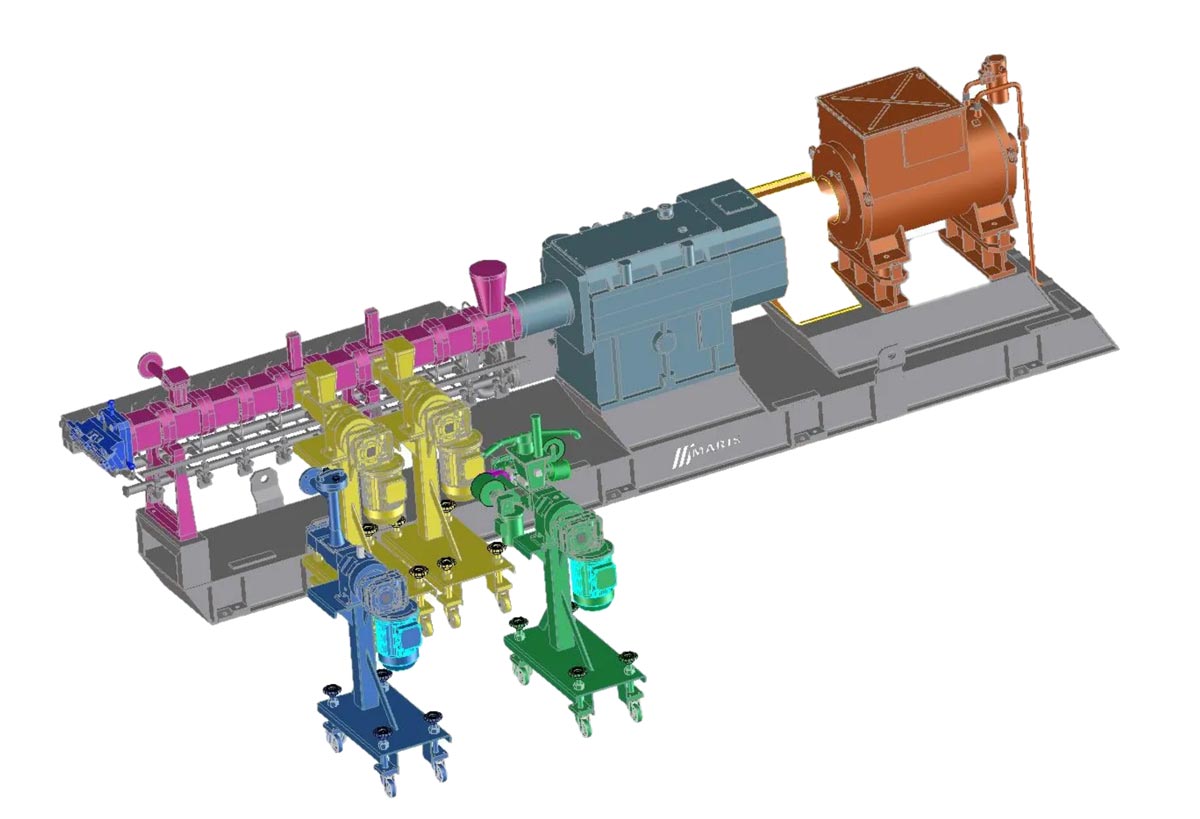
Il risultato sono degli estrusori che fanno della versatilità d’uso il loro punto di forza, consentendone l’inserimento nei molteplici lay-out produttivi caratteristici delle più svariate tipologie produttive legate al compounding.
La flessibilità produttiva è la nostra forza e ci permette di fornire ai nostri clienti soluzioni su misura, impianti e linee di estrusione personalizzate per soddisfare ogni esigenza.

La nostra filiera viene definita a cambio rapido, in quanto lo smontaggio avviene allentando, ma non rimuovendo, le viti di fissaggio.
In questo modo, non vi saranno parti calde da maneggiare e sarà possibile cambiare la parte finale sollevandola dalle apposite manopole e sostituendola a seconda delle necessità di pulizia o alle esigenze di variazione del numero o delle dimensioni degli spaghetti che si vogliono ottenere.
Nel caso di estrazione delle viti estrusore, è presente un sistema incernierato apribile che permette, solo estraendone alcune, di poter accedere alle punte in modo rapido. Pertanto, solo quattro viti dovranno essere maneggiate, non vi sono né pezzi caldi né un certo peso da sostenere.
Un altro aspetto di non poco conto è costituito dal riscaldamento laterale della filiera. In molti casi, e soprattutto sulle nuove macchine ad alta produttività, la filiera è molto larga e comporta la possibilità che si riscontrino differenti temperature tra le varie zone, che a loro volta generano flussi irregolari con conseguenti spaghetti di diverso diametro. Vi sono inoltre delle resistenze posizionate lateralmente che permettono di variare il riscaldamento e compensare tale fenomeno.
Il cilindro, che costituisce la zona di processo, viene configurato mediante l’uso di differenti moduli aventi funzionalità diverse.
Dal punto di vista costruttivo sono disponibili in due forme geometriche: rotondo o quadrato.
Le diverse forme distinguono anche l’impiego di diverse tipologie di resistenze elettriche. Nel caso della forma rotonda, si possono impiegare resistenze in ceramica o in fusione (alluminio, acciaio o bronzo), mentre per il cilindro quadro si possono impiegare resistenze a candela o resistenze in fusione (alluminio, acciaio o bronzo).
Per quanto riguarda i materiali costruttivi, in base alle applicazioni si possono avere più opzioni:
dal cilindro nitrurato a cilindri con inserti rimovibili in acciai speciali antiusura, anticorrosione o la combinazione delle due proprietà. Tali acciai vanno da materiali a tutta tempra sino a materiali HIP e bimetallici: siamo sempre all’avanguardia nella ricerca di nuovi materiali atti a migliorare le prestazioni dei nostri estrusori.
I nostri riduttori sono costruiti e progettati internamente in-house.
Gli estrusori bivite corotanti richiedono riduttori speciali che possano trasmettere l’alta densità di coppia richiesta da questo tipo di macchine.
Il riduttore viene progettato avvalendosi di programmi di disegno e di calcolo che permettono di ottenere i risultati previsti e sopportare le sollecitazioni a cui esso verrà sottoposto. La progettazione viene svolta calcolando le parti a dimensioni reali e su modelli tridimensionali.
Si tratta di riduttori speciali dove il moto viene diviso tra vari rami di potenza e ricongiunto per poterne trasmettere la potenza ai due alberi delle viti. Questo genera un riduttore molto complesso con dispositivi e regolazioni particolari per far sì che ogni albero delle viti riceva esattamente metà della potenza.
L’alta densità di coppia richiede l’impiego di materiali avanzati e trattamenti che devono essere controllati. Producendo interamente le parti, costruendole e lavorandole al nostro interno, possiamo valutare tutti gli aspetti del processo di fabbricazione.
Allo stesso modo vengono controllati dimensionalmente tutti i riduttori dal nostro collaudo interno.
Esternamente al riduttore viene posto l’impianto di lubrificazione che provvederà a portare l’olio alle singole parti. Il sistema di lubrificazione dispone di sensori per impedire che eventuali malfunzionamenti danneggino il riduttore.
La nostra azienda pone sempre estrema cura nella scelta del motore da installare sulle proprie macchine.
Il motore può essere fornito in varie tipologie, quali:
Il motore è dotato di sensori di temperatura, encoder per un più accurato controllo della velocità e, nel caso di motori raffreddati ad acqua, di un sistema che ne monitori temperatura e flusso. Inoltre, il sistema è provvisto di elettrovalvola e di filtro per evitare l’ingresso di parti estranee nel motore.
Tra motore e riduttore viene inserito un limitatore di coppia per eliminare sovraccarichi, che possono essere generati da eventuali bloccaggi delle viti, preservando il riduttore. Questi dispositivi, acquistati esternamente, vengono però analizzati insieme al fornitore e personalizzati a seconda dell’utilizzo. L’avvenuto sganciamento del limitatore, che azzera completamente la coppia, viene segnalato da un microswitch che arresta il motore così da evitare che quest’ultima, generata dal motore per inerzia, si scarichi sul riduttore.
Il sistema di degasaggio laterale è un equipaggiamento utilizzato per ottimizzare il degasaggio / sfiato atmosferico nel processo di estrusione. Alcuni materiali processati, infatti, a causa delle loro specifiche caratteristiche reologiche, possono causare l’intasamento del caminetto standard di degasaggio, impedendo così la corretta devolatilizzazione dei gas. In questi casi è necessario utilizzare il sistema di degasaggio laterale, dove il caminetto di degasaggio è montato su un dispositivo a doppia vite, che garantisce elevati volumi di devolatilizzazione e, allo stesso tempo, nessun intasamento, nessun ristagno di materiale, nessun inquinamento dovuto al polimero degradato.
Il dispositivo di degasaggio laterale è quindi composto da un alloggiamento e da una coppia di coclee corotanti del tutto simili alle macchine alimentatrici laterali, ma la tramoggia standard è stata sostituita da un camino. La chiusura ermetica garantisce una corretta tenuta durante il funzionamento con livelli di vuoto comunemente usati nei processi di compounding.
L’alimentatore laterale a doppia coclea è un equipaggiamento che consente l’alimentazione dei materiali lungo il processo di estrusione. I materiali introdotti possono essere additivi, polimeri, resine o riempitivi, sia in forma di polveri, granuli o fibre.
Il suo utilizzo, in base alle formulazioni, è indicato quando si vuole incrementare la percentuale di una carica, aumentare la capacità produttiva e in alcuni casi aumentare la qualità del compound prodotto. Il numero di alimentatori laterali utilizzati varia in funzione della formulazione e del processo, da uno per i compound standard sino a tre per i compound alto caricati (es. poliolefine con 86% di CaCO3).
Il sistema di deaerazione è un equipaggiamento da noi brevettato che permette di migliorare la capacità di introduzione di alcuni tipi di polveri nel processo di estrusione.
L’obiettivo è quello di aumentare la densità apparente del materiale rimuovendo l’aria contenuta nelle polveri (cariche).
Il funzionamento di questo equipaggiamento avviene mediante l’applicazione del vuoto su una superficie filtrante porosa che permette la rimozione dell’aria contenuta nelle cariche da alimentare nell’estrusore.
L’utilizzo di questa tecnologia, rispetto ad un alimentatore laterale standard, può permette quindi di aumentare il riempimento della vite e conseguentemente la capacità produttiva, la riduzione dell’energia specifica – quindi dei consumi energetici – e più in generale, ottenere una riduzione dei costi di produzione.
I dati personali da Lei inseriti, sono trattati dal proprietario del sito Maris Fratelli Spa – Corso Moncenisio 22 – 10090 Rosta (TO) – +390119567925 in qualità di Titolare, per finalità connesse alla fornitura dei servizi da Lei richiesti (a titolo esemplificativo: richiedere informazioni, registrarsi al sito per ricevere vantaggi e offerte, ottenere preventivi, effettuare pagamenti, acquistare beni e riceverli presso un domicilio da Lei indicato, effettuare una prenotazione, scambiare documenti).
Inoltre, i dati da Lei forniti, potrebbero essere trattati, solo su Suo esplicito consenso, al fine di inviarLe comunicazioni di natura commerciale via email o sms relativamente ai servizi offerti dal Titolare.
Nel primo caso, la base giuridica del trattamento è l’esecuzione di un accordo; nel secondo caso è il consenso. I trattamenti avverranno con modalità elettroniche e verranno messi a disposizione delle terze parti (Responsabili Esterni del trattamento) nell’ambito dell’Unione Europea o in Paesi extra UE, regolarmente contrattualizzate e che offrono adeguate garanzie di sicurezza, necessarie per la fornitura di servizi essenziali al soddisfacimento delle Sue esigenze. Tali Responsabili Esterni, il cui elenco è disponibile dietro richiesta, possono appartenere a categorie di soggetti che supportano il Titolare nell’erogazione dei servizi offerti tramite il presente sito (quali, a titolo esemplificativo: sviluppatori software e gestori di siti web, spedizionieri).
Inoltre, saranno trattati per finalità di analisi statistiche e di marketing diretto, in maniera anonima, come meglio specificato dalla cookie policy.
Per modificare o cancellare i soli dati che sono archiviati sui sistemi che erogano il presente sito, cliccare qui. Le informazioni da lei inserite nel form (compreso il suo indirizzo email) potranno essere comunicate a una società terza che agirà in qualità di Responsabile esterno e che supporta il Titolare nella gestione del sito e nell’evasione della sua richiesta.
Nel caso di richiesta di cancellazione dei suoi dati, La informiamo che potrebbe non essere più possibile continuare a fornirLe il servizio richiestoci.
La informiamo, infine, che potrà proporre reclamo all’Autorità Garante per la Protezione dei Dati, qualora ritenesse siano stati violati i suoi diritti.
***********************************
COOKIE POLICY
Questo Sito utilizza cookie tecnici (ovvero cookie necessari), e con il tuo consenso anche cookie analitici e di profilazione, che utilizzeremo noi e terze parti, utili rispettivamente per consentire alcune funzionalità fondamentali per il Sito, per ottenere misurazioni delle perfomance del Sito stesso o per fornirti indicazioni promozionali in linea con i tuoi interessi.
Per accettare, rifiutare o selezionale i cookie in base alle finalità, utilizza i comandi presenti nel popup banner per la gestione dei cookie.
In particolare, per sapere quali cookie vengono installati tramite il presente sito ed esprimere le tue preferenze a riguardo, seleziona il comando “ “Dettagli” dove è possibile anche visualizzare i singoli cookie rilasciati in ogni categoria. Per selezionare le finalità di tuo interesse utilizza il box riportato nel banner, e clicca su “Personalizza” per confermare le tue preferenze.
Le tue preferenze verranno registrate in un’apposita piattaforma di gestione del consenso ai cookie (la “CMP”), sviluppata in conformità ai principi della normativa sul trattamento dei dati personali applicabile secondo le linee guida per consentire all’utente di esercitare le sue scelte in maniera granulare. La CMP consente di prestare o negare il consenso a varie tipologie di cookie, che sono identificate e classificate sulla base delle finalità per le quali i cookie vengono rilasciati e utilizzati, rendendo più semplice ed immediato il loro riconoscimento.
Puoi in qualunque momento revocare o modificare il consenso rilasciato, cliccando sulla relativa icona di accesso alla CPM che apparirà sul Sito. Tale icona verrà visualizzata in basso a sinistra, una volta che avrai espresso le tue preferenze tramite il pop up banner visualizzato, nel momento in cui accedi al Sito stesso.
I cookies utilizzati in questo Sito rientrano nelle categorie descritte di seguito.
Cosa sono i cookies
I cookies sono piccoli file di testo che vengono automaticamente posizionati sul PC del navigatore all’interno del browser. Essi contengono informazioni di base sulla navigazione in Internet e grazie al browser vengono riconosciuti ogni volta che l’utente visita il sito.
Di seguito vengono forniti dettagli sui cookie installati da questo sito e indicazioni su come gestire le preferenze in merito ad essi.
A cosa servono i cookies
I cookie sono utili in quanto consentono di memorizzare le preferenze di navigazione dell’utente e quindi personalizzare il sito, secondo le sue esigenze migliorando le esperienze di navigazione degli utenti. I cookie possono ad esempio rendere più immediato l’utilizzo del Sito e/o abilitare determinate funzionalità. Ad esempio, i cookie possono permettere di evitare di reinserire le stesse informazioni più volte durante la visita. In determinati casi, inoltre, i cookie possono fare in modo che le pubblicità visualizzate online siano più adeguate all’utente o pertinenti ai suoi interessi. Alcuni cookie sono necessari alla corretta erogazione del Sito o utili per una fruizione personalizzata degli stessi; in questo caso, la loro inibizione potrebbe compromettere alcune funzionalità dei Sito. Inoltre, grazie ai cookie, si possono pubblicare sul Sito stesso, direttamente o tramite terzi, inserzioni pubblicitarie in linea con i tuoi interessi, dedotti sulla base delle tue attività online e delle tue abitudini di navigazione.
Quali categorie di cookie sono utilizzate sul Sito
1 – Cookie tecnici ovvero necessari
I cookie tecnici descritti qui di seguito non richiedono consenso e pertanto vengono installati automaticamente a seguito dell’accesso al sito.
– Cookie necessari al funzionamento: cookies che permettono al sito di funzionare correttamente anche consentendo all’utente di avere un’esperienza di navigazione funzionale. Ad esempio, mantengono l’utente collegato durante la navigazione evitando che il sito richieda di collegarsi più volte per accedere alle pagine successive.
– Cookie Statistici e di Misurazione dell’audience: cookie che aiutano a capire, attraverso dati raccolti in forma anonima e aggregata, come gli utenti interagiscono con il Sito internet fornendo informazioni relative alle sezioni visitate, il tempo trascorso sul sito, eventuali malfunzionamenti.
Per esempio, in alcuni casi i cookie di Google Analytics utilizzati da questo sito, sono stati resi anonimi e quindi sono equivalenti a cookie tecnici.
2 – Cookie Funzionali
In questa categoria rientrano i cookie che permettono di ricordare le preferenze selezionate durante la navigazione, ad esempio, consentono di impostare la lingua. Questi cookie sono rilasciati soltanto su richiesta dell’utente e mediante suo preventivo consenso. L’utente è libero di prestare il proprio consenso all’installazione dei cookie funzionali e revocarlo in qualsiasi momento, tramite la CMP, senza che la possibilità di visitare il Sito e fruire dei suoi contenuti sia compromessa; tuttavia, se non acconsentissi a questi cookie potrebbe essere pregiudicato l’utilizzo di alcune funzionalità.
Puoi accedere, in qualunque momento, alla CMP tramite l’icona presente sul Sito, dove troverai il riepilogo dei consensi rilasciati che potrai modificare cliccando sul pulsante “Modifica consenso”; a questo punto si aprirà una schermata che ti permette di modificare le tue preferenze scegliendo le categorie di tuo interesse e tramite il pulsante “Dettagli” puoi conoscere quali cookie funzionali sono rilasciati sul Sito, la loro finalità e la durata. Una volta fatta la tua scelta, per confermarla clicca sul pulsante “Personalizza”.
3 – Cookie Analitici
I cookie di questa categoria vengono utilizzati per raccogliere informazioni statistiche, in forma non aggregata, sull’uso del Sito da parte degli utenti che accedono al Sito stesso e sul modo in cui questi navigano sul Sito.
Come previsto dalla normativa applicabile, per l’installazione di cookie analitici di terze parti è richiesto il preventivo consenso dell’utente. Nel caso in cui presti il tuo consenso all’installazione dei cookie analitici, il Titolare terrà traccia di tale consenso attraverso un cookie tecnico specifico. In questo modo, sarà possibile evitare di riproporre il cookie banner durante le future visite al Sito. Puoi accedere, in qualunque momento, alla CMP tramite l’icona presente sul Sito, dove troverai il riepilogo dei consensi rilasciati che potrai modificare cliccando sul pulsante “Modifica consenso”; a questo punto si aprirà una schermata che ti permette di modificare le tue preferenze scegliendo le categorie di tuo interesse e tramite il pulsante “Dettagli” puoi conoscere quali cookie analitici sono rilasciati sul Sito ed ottenere così tutte le informazioni necessarie. Una volta fatta la tua scelta, per confermarla clicca sul pulsante “Personalizza”.
Inoltre, accedendo alla pagina http://www.youronlinechoices.com/it/le-tue-scelte è possibile informarsi sulla pubblicità comportamentale oltre che disattivare o attivare i cookie delle società elencate che lavorano con i gestori dei siti web per raccogliere e utilizzare informazioni utili alla fruizione della pubblicità.
Ricordati che puoi gestire le tue preferenze sui cookie anche attraverso il browser
Si riportano di seguito istruzioni di maggior dettaglio per la gestione dei cookie da parte dell’utente per i browser più diffusi. I produttori dei browser potrebbero aggiornare o modificare i riferimenti dei link sottostanti di volta in volta, per cui si raccomanda di verificare sempre le istruzioni fornite dai produttori dei browser di navigazione utilizzati per comprendere come impostare i cookie.
Se si utilizza il browser Edge
Se si utilizza il browser Firefox
Se si utilizza il browser Safari
Se si utilizza il browser Google Chrome
Ultimo aggiornamento: 06/06/2023.